|
CLUSTER:
One Hour CD (GYROSCOPE)
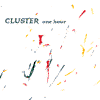 This
is an odd one. Something about this CD gives me a really off-kilter
feeling. It was recorded in the 80s, and appropriately features
a numbing array of gooey MIDI-style synth patches, fake violins,
tones from straight-to-video cheeseball off-Hollywood Z-movie
films about sand volleyball...it's WEIRD. To make it weirder,
it's all improvised (four hours of jams edited down to, natch,
one hour), and none of the lo-key electro drum machine rhythms
that always gave Cluster their blissout style are here to anchor
things. So you get all this unrepentant cheese, but it's floating
freely in some strange ether, like a weird colorful balloon-like
alien floating just out of the reach of those sand volleyball
players, disrupting their game. The chaps also have this amazing
technique where they improvise a really Hallmark card-worthy melody,
but then suddenly stop it and let space sit there (maybe filling
it with a quirky tone or two, maybe not), and then, just when
you think your stereo might be broken, they reprise the Hallmark
card thing just as unctuously as last time, only to stop it again
suddenly and REALLY make you think your stereo is broken. Gives
me the same feeling as the accompanying music in the 'interview'
sequence of Godard's Weekend. An ironically sick, eerie
bunch of music, when it's all said and done. Quietly attaining
some sort of 'classic' status with the anti-anti-anti set. This
is an odd one. Something about this CD gives me a really off-kilter
feeling. It was recorded in the 80s, and appropriately features
a numbing array of gooey MIDI-style synth patches, fake violins,
tones from straight-to-video cheeseball off-Hollywood Z-movie
films about sand volleyball...it's WEIRD. To make it weirder,
it's all improvised (four hours of jams edited down to, natch,
one hour), and none of the lo-key electro drum machine rhythms
that always gave Cluster their blissout style are here to anchor
things. So you get all this unrepentant cheese, but it's floating
freely in some strange ether, like a weird colorful balloon-like
alien floating just out of the reach of those sand volleyball
players, disrupting their game. The chaps also have this amazing
technique where they improvise a really Hallmark card-worthy melody,
but then suddenly stop it and let space sit there (maybe filling
it with a quirky tone or two, maybe not), and then, just when
you think your stereo might be broken, they reprise the Hallmark
card thing just as unctuously as last time, only to stop it again
suddenly and REALLY make you think your stereo is broken. Gives
me the same feeling as the accompanying music in the 'interview'
sequence of Godard's Weekend. An ironically sick, eerie
bunch of music, when it's all said and done. Quietly attaining
some sort of 'classic' status with the anti-anti-anti set.
KHOURY/SHEARER/HALL CD-R (PUBLIC
EYESORE)
 As
is often the case with Public Eyesore, I don't know who these
guys are or where they come from. Well, I do know they come from
Detroit, which should really be enough. It makes sense that Detroit
would have some cookin' free jazz going on, and this definitely
fits the bill. In fact, this is the first free jazz group I've
heard to specifically remind me of Test, in that head/solo/solo/ As
is often the case with Public Eyesore, I don't know who these
guys are or where they come from. Well, I do know they come from
Detroit, which should really be enough. It makes sense that Detroit
would have some cookin' free jazz going on, and this definitely
fits the bill. In fact, this is the first free jazz group I've
heard to specifically remind me of Test, in that head/solo/solo/
solo/head is not the order of the day, rather a free-floating
nebulous thing where everyone seems to be spontaneously composing
and chattering and weaving all at once, so instead of head then
solo then solo then solo then head it's more like SOHEADLO. You
know what I mean? And, I don't mean that they're derivative of
Test, I just think that when it comes to subtle tectonic shifts
in the surface of current jazz music, Khoury/Shearer/Hall and
Test are on the same fault line, a small fissure which extends
from New York City to Detroit (and then all the way to Christchurch,
New Zealand due to rumblings from the CM Ensemble) and isn't really
occupied by anyone else. Besides, Khoury/Shearer/Hall have a lineup
different than Test, with Mike Khoury on violin, Jason Shearer
on saxophone, clarinet, and flute, and Ben Hall on percussion
(and piano on one track, barely audible but worth it). The violin
is a sort of rarely used free jazz instrument, and Khoury ends
up being the best I've heard on the instrument since Leroy Jenkins.
(I've never really heard Billy Bang.) This album is sort of a
compilation of/introduction to the group, a mixture of live and
studio tracks. I especially like track three, which starts slow/introspective
and exquisitely gets faster/extrospective over the course of ten
minutes. (For this piece they become a quartet, joined by one
Maury Coles on saxophone.) And P.S., in a rather neat coincidence,
I just realized that Jason Shearer of this trio also got mentioned
on the very previous page, as a sideman on the Sound Signature
CD. Crazy...
OPPROBRIUM ON-LINE
In a review in Muckraker, Patrick Marley called Opprobrium the
most worthy follower to the Forced Exposure crown. I agree that
it was, for five impressive issues, after which editor/publisher
Nick Cain has -- understandably -- eliminated that nasty printing
issue and scaled things down to an online-only operation. Understandable,
but I do miss being able to just pick up the magazine a couple
times a day and flip through the pages and read ten or so reviews
at random and then be done with it. However, even if I can no
longer read Opprobrium on the toilet, Cain has really taken no
shorts on the online version; there's still an eons-wide grip
of reviews and a long interviews, including one with Derek Bailey
in the debut online issue. Still plenty of opinion and information
to click through here, more than enough to justify the painstaking
mouse-clicking necessary to get through it all.
However, I next
have to ask myself: how many more reviews by Nick Cain do I feel
like reading? Don't get me wrong, I've gleaned a lot of info from
his work over the years, but it seems more than ever before that
every review is more an 'exercise' than it is an actual critical
consideration. From the first sentence, it's always clear where
he is going, and the only involvement for the reader is what 'acrobatic'
sentence he uses to get 'there' this time. He only goes three
places, as far as I can tell: 1. "This is a drone/freenoise
type record made by a friend of mine, so I'm going to floridly
praise it," 2. "This is a drone/freenoise record made
by someone who isn't in my clique, so I'm going to floridly pan
it, and perhaps even use the word 'dickhead' while I'm at it,"
and 3. "This is a free jazz record, so I might praise it
or pan it, but either way, I'll be sure to write about three pages
worth of discographical esoterica about it."
The latter approach
still has some merit, again from a strictly information-supplying
standpoint...I'm still reeling from the introduction to Kaoru
Abe that Cain gave me in a past issue (print issue #4, I believe).
The first and second approaches are getting more and more tiresome.
While Cain's virulent anti-'drone' bias is commendably balancing
in a Drone-On world, he might as well come out and say "I hate
drone unless it's being performed by someone from, or friendly
with, my local scene." Just because they are examples of very
good drone music doesn't make Surface of the Earth's oeuvre and,
say, Bruce Russell's Maximalist Mantra Music NOT drone
music. Another thing that bugs me a bit is that Cain has always
written off the Campbell Kneale/Birchville Cat Motel/Celebrate
Psi Phenomeon axis -- what, are they 'more' drone than Surface
of the Earth and therefore not as worthy? Now that Birchville
Cat Motel is slated for a Corpus Hermeticum release, we might
just get an about-face. Until then, we can entertain ourselves
by taking a Maxell dub of any Birchville recording, writing
"by Bruce Russell" on the spine, giving it to Nick Cain, sitting
back, and watching him praise it.
But, you
know, hey. Ultimately, however tirelessly 'opprobrious' he may
be, you've got to hand it to Cain, for the sheer dedicated work
he performs more ably than most. Even if you don't agree with
him, you have to admit that he gives new meaning to the word "voluminous."
And as an editor, Cain curates some pretty good writing, such
as the overview of Las Rellizes Denudes by Paul Collett, or how
about the out-of-nowhere art historical/pomo-critical Mayahoshi
Urabe review by some guy called Michel Henritzi, which features
stuff like this: "Urabe claims he's removed from the jazz idiom,
maybe only influenced by Lou Reed, Billie Holiday and Georges
Brassens, the soft rattling of the language that you can hear
in the catatonic screams of his alto, while Hasegawa is screaming
as if he was being skinned alive. You have to read Artaud and
Céline again to understand what's happening here. They are like
those tortured people Artaud was talking about, still sending
messages while they are burning alive." Yow! On top of stuff like
that, he's got Borbetomagus guitarist Donald Miller writing actual
poems for his reviews...not only is the review section infinitely
more readable than The Wire's, it's also basically as good
of a poetry book as the Ecstatic Peace Poetry Journal!
The rest of the staff
remains quite solid. Cain could take a few lessons from Alan Cummings,
who weaves criticism into his reviews with comments that are relaxingly
offhand while no less perceptive and challenging. The aforementioned
Bruce Russell seems to have a most unopprobrious "no-pans" policy,
tending to stick with records that turn him on and that he wants
to bring wider recognition to. Marc Masters continues to go to
over-the-top lengths to say "I really like this free jazz record"
over and over again, though I do love his Assif Tsahar-as-Archie
Manning free jazz-as-the-
NFL metaphor. (Of course, with its being on a page with a url
like http://www.info.net.nz/opprobrium/html/online/1/reviews/e1_reviewsT2.html,
only geeks like me/you are ever gonna see it.) Mike Trouchon,
like Russell, tends to stick with records he's excited about,
and certainly can share his enthusiasm with his creative and oft-soulful
metaphors and similes. Jon Bywater composes oblique quasi-poetic
summaries with a tone that vacillates between odd praise and vaguely
Cain-ish smarm. Cain has also signed up James Lindbloom, another
writer whose specialty is free jazz...who knows, in a few issue's
time Opprobrium might actually become Cadence Magazine! NZ/Japan
music expert Paul Collett is another new and prized addition to
the staff -- if you haven't seen his
website, check it out.
Anyway,
yeah, I'll keep reading Opprobrium, especially now that I got
a couple of the things that were bothering me off of my chest.
In fact, the website says that the second on-line issue was scheduled
for June 2001. It hasn't been published yet, but don't be too
hard on Mr. Cain. I have a hard enough time putting together 9-12
pages of music opinion and information myself every two months,
and at the pace Cain has set with his first issue, he's doing
about five times that much. You can't knock him for not putting
in the work...
SYD STRAW: Surprise LP (VIRGIN)
 Musician
list reads like a gol-dinged 1980s 'Downtown' Cheese Circus of
Avant Beatnik Stars: (in chronological order, starting with side
one track one) Peter Holsapple, Marshall Crenshaw, Tony Levin,
Jody Harris, Anthony Moore, Peter Blegvad, Pino Palladino (the
bass player for Paul Young???), Richard Thompson, Don Was, Marc
Ribot, Benmont Tench, Dave Alvin, Bernie Worrell, John Doe, Ry
Cooder, Jim Keltner, and Van Dyke Parks himself. And that's just
side one, with the first track on side two featuring none other
than Michael Stipe himself. And get this, tracks were recorded
in only Woodstock, London, Los Angeles, New York City, Austin,
AND "Brian Eno's House". What's going on here?! Musician
list reads like a gol-dinged 1980s 'Downtown' Cheese Circus of
Avant Beatnik Stars: (in chronological order, starting with side
one track one) Peter Holsapple, Marshall Crenshaw, Tony Levin,
Jody Harris, Anthony Moore, Peter Blegvad, Pino Palladino (the
bass player for Paul Young???), Richard Thompson, Don Was, Marc
Ribot, Benmont Tench, Dave Alvin, Bernie Worrell, John Doe, Ry
Cooder, Jim Keltner, and Van Dyke Parks himself. And that's just
side one, with the first track on side two featuring none other
than Michael Stipe himself. And get this, tracks were recorded
in only Woodstock, London, Los Angeles, New York City, Austin,
AND "Brian Eno's House". What's going on here?!
Apparently, some kind of crazy
1980s rich-hippie whim on the part of Richard Branson called "Let's
spend as much money as possible on hip underground just once this
decade!" And sure enough, the whole project has the same
cocaine whiff of any of the 1970's most egregious big-money rock
supersession trifles: a hell of a lot of fun for you lucky talented
muso partiers, but not necessarily any AOR slop worth releasing.
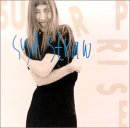
Syd does have a nice voice (a lotta folks do), and she looks good
(a lotta folks would) on the front/back/inner sleeve trio of Herb
Ritts-ish B&W photos (lovely laughing Syd/anxiety-ridden Syd/leaning
enigmatically Syd). This album design, combined with an MTV News
spot I saw in my freshman dorm room, and the egregious amount
of money that was obviously spent making this thing, are what
gave Straw her 15 minutes, at least for me.
But I misuse Warhol,
because I've spent more than 15 minutes listening to this album.
Maybe even....say....80. Thing is, that's spread out over the
last eleven or twelve years. I kinda sorta liked it when I first
got it. After seeing said MTV News bit in my University of Nebraska
dorm-room, I checked-out a vinyl copy of it from the Lincoln Public
Library and made a cassette dub before returning it. I was 18
years old, fresh out of hick Iowa high school, living four doors
down from another Frank Zappa enthusiast, this even older (20),
and from 'the big city' (Omaha), and I felt like I had a chance
to be a real intellectual, or at least a respectable iconoclast.
At the time, I really did think avant-muso tendencies were a totally
legit way around popular music's vast sandtrap mediocrity. (Now
I think that blast/hush and "true soul" tendencies are
the most legit way around, but that's obviously a different essay
than this one.) I was fresh out of high-school concert band, raised
on Zappa and The Police, so this particular well-played rock music
for smart people went down sorta like honey. It was all elevator
music to me, like noise music is now.
Plus, there
were two good hooks on side one that I could sometimes sing to
myself: "You wish too hard...wishes will come true...I wouldn't
wish that on you..." and "It's his turn to cry...his
turn to cry..." And, I could pat myself on the back for recognizing
all the avant-hip luminaries like Ry Cooder and Peter Holsapple
and Richard Thompson, even if I never could get a sense of what
any of them were actually playing in the gloopy overcrowded-but-flatlined
session atmosphere.
I listened
to the first half maybe four separate times but don't ever recall
making it all the way through side two, and before too long I
put it away for good. Taped over my dub after awhile, and then
six or so years later I bought the exact same vinyl copy for 25
cents at the annual library sale, I think more just because of
the Herb Ritts-ish photos of Syd (not actually taken by Herb)
and because 25 cents is a pretty cheap price for sentimental value.
Haven't even made it through side one once with the LP version
-- hell, I'm not even sure I've ever even played it -- but for
some reason I've kept it for 4-6 years, or however long it's been.
Why? Because Marc Ribot is on it? Once a muso, always a muso,
but at least I'm starting to learn that NYC underground-rock jetset
supersession indulgences are just as mediocre as LA superstar-rock
jetset session indulgences.
(Where
is she now? Well, I literally don't think I've heard or seen
mention of her once outside of MTV News and the sleeve of my (and
previously the Lincoln Public Library's) very own copy of her
record, but type in www.sydstraw.com on the internet, and sure
enough, there she is.)
|